Introduction
Market context and why luxury bathrooms matter in Roseville
Establishing project goals and scope
Design trends and layout strategies
Material and finish selection
Mechanical, plumbing, and electrical systems
Waterproofing and building science
Accessibility and universal design in luxury spaces
Resources
Introduction
A luxury bathroom renovation is more than a cosmetic upgrade — it is a strategic investment in comfort, functionality, and property value. In Roseville, California, homeowners demand bathroom spaces that blend regional climate considerations, contemporary design, and high-quality craftsmanship. This article provides a comprehensive guide to planning, designing, and executing a luxury bathroom renovation in Roseville, covering trends, material selection, systems and fixtures, budgeting, contractor selection, permitting, accessibility, sustainability, and post‑project care.
Whether you seek a spa‑like master bathroom, an elegant guest bath, or an upscale powder room for entertaining, this guide will equip you with the decisions and checklists necessary to deliver a project that meets aesthetic ambitions and long‑term performance expectations.
Market context and why luxury bathrooms matter in Roseville
Roseville is a dynamic suburban market in the Greater Sacramento region with steady demand for high‑quality residential properties. Local buyers and renters frequently prioritize modernized kitchens and bathrooms; luxury bathroom upgrades can significantly improve resale value and marketability. Several market factors make luxury renovations particularly attractive:
- Buyer expectations: In higher‑tier neighborhoods, buyers expect modern amenities — frameless glass showers, large format tile, and high‑end fixtures. A thoughtfully executed luxury bathroom helps a home stand out in competitive listings.
- Climate considerations: Roseville’s Mediterranean climate—wet winters and hot, dry summers—affects material and systems choices. Proper ventilation, moisture‑resistant materials, and efficient HVAC integration are essential to avoid mold and material degradation.
- Investment return: While kitchen remodels often deliver high returns, bathroom renovations also provide strong ROI, especially when targeted toward master bathrooms and guest bathrooms in mid‑to‑upper market homes.
Understanding local market expectations and climate constraints is the first step toward a successful luxury renovation.
Establishing project goals and scope
Begin every luxury bathroom renovation by defining goals and realistic scope. A clear brief will guide design decisions, procurement, and contractor selection.
Typical goals for luxury renovations
- Create a spa‑quality experience with soaking tubs, steam showers, and integrated seating.
- Improve functionality via better storage, lighting, and circulation.
- Upgrade mechanical systems for efficiency and comfort (in‑floor heating, energy‑efficient water heaters, low‑flow fixtures that don’t sacrifice performance).
- Use premium materials and finishes for longevity and visual impact.
- Incorporate accessibility elements without compromising aesthetic.
Scope definitions
Scope ranges from a cosmetic refresh (tile, fixtures, paint) to a full gut‑out remodel involving structural changes, updated plumbing/electrical, and layout reconfiguration. Common scope categories:
- Cosmetic refresh: Replace cabinetry, countertops, fixtures, and finishes; retain existing footprint and plumbing locations.
- Partial remodel: Change finishes and fixtures and modify limited plumbing or lighting locations; may include a new shower or tub installation but retains major structural elements.
- Full remodel (gut‑out): Demolish to studs, reframe walls if needed, replace or relocate plumbing/electrical, install new waterproofing, and change the footprint or layout.
Budget, timeline, and long‑term goals will determine which scope is appropriate.
Design trends and layout strategies
Luxury bathroom design today favors clean lines, natural materials, and layouts that prioritize comfort and efficiency. Key design directions relevant to Roseville homeowners include:
Spa‑centric master bathrooms
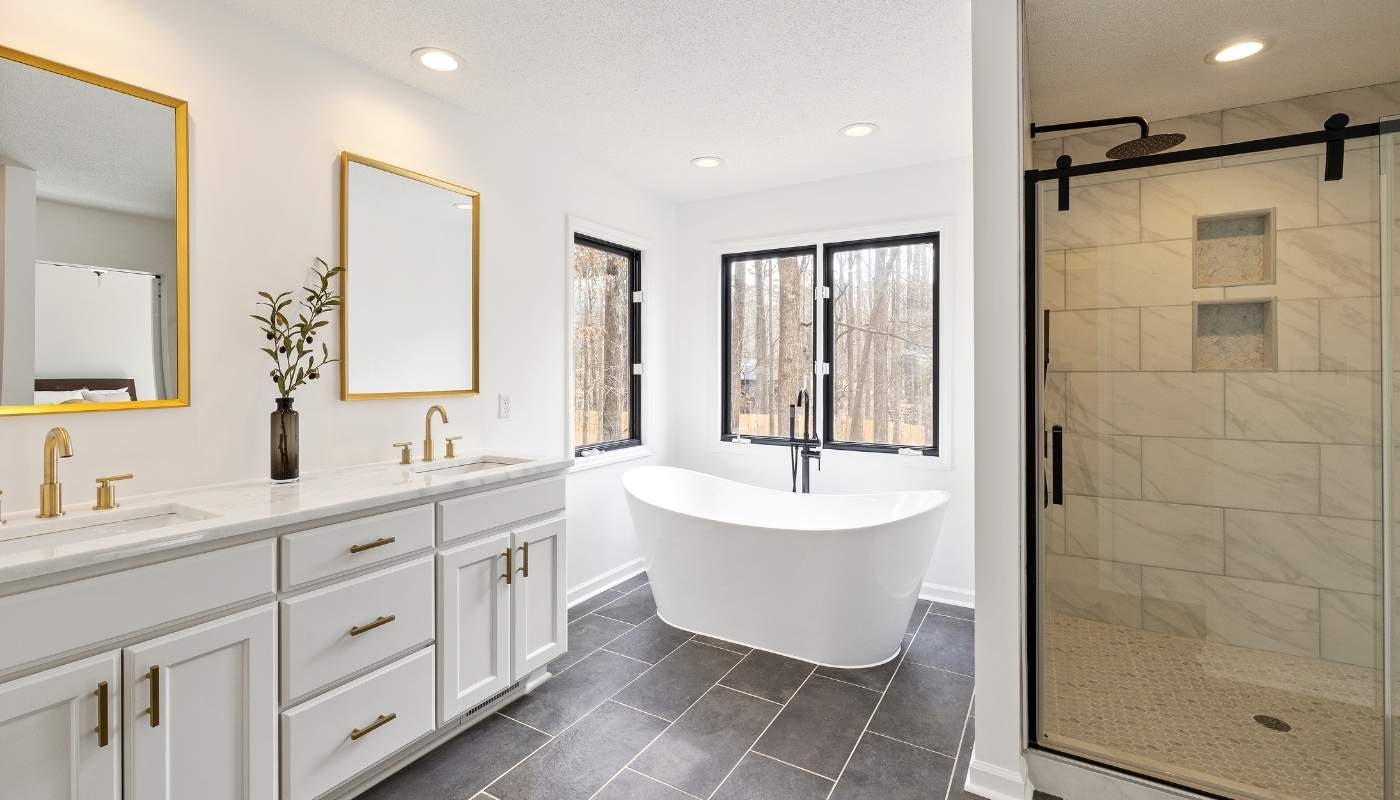
Spa features—freestanding soaking tubs, steam showers, towel warmers, and seating nooks—create a retreat within the home. A common layout separates the wet area (shower/tub) from the dry area (vanity, WC) and includes dedicated storage for linens and personal items.
Wet rooms and open‑concept showers
Wet rooms — fully waterproofed shower zones occupying a portion or the entirety of the bathroom floor — are a modern luxury that improves accessibility and visual spaciousness. Design considerations include linear drains, slope planning, non‑slip tile, and robust waterproofing membranes.
Dual vanities and personalized zones
Dual vanities remain a hallmark of luxury master baths, allowing individualized height, storage, lighting, and mirror systems. Consider dedicated zones for makeup, shaving, and grooming that feature specific lighting and electrical outlets.
Integrated technology and smart features
Technology integration enhances convenience and comfort: programmable thermostatic valves, steam controls, LED color‑temperature adjustable mirrors, occupancy sensors for lighting, and smart exhaust fans that respond to humidity changes.
Material palettes and aesthetics
Natural stone (marble, quartzite), large‑format porcelain, and engineered quartz countertops are popular for durability and luxury aesthetics. Warm neutrals, muted greens or blues, and matte black or brushed metal fixtures are typical high‑end palettes.
Material and finish selection
Selecting appropriate finishes is critical to both appearance and long‑term performance. Focus on durable, low‑maintenance materials that complement the design language.
Flooring
- Porcelain tile: Highly durable, low water absorption, available in large formats and realistic stone or wood visuals. Choose a textured or matte finish for wet areas to reduce slip risk.
- Natural stone: Marble or travertine impart luxury but require sealing and more maintenance. Use slip‑resistant treatments and plan for long‑term care.
- Heated floors: Electric or hydronic radiant heating provides comfort and speeds drying; select compatible underlayment and tile adhesives.
Walls and showers
- Large format porcelain: Minimizes grout lines, reducing maintenance and the risk of mold in grout joints.
- Waterproof panels: Engineered solid surface or composite wall panels simplify waterproofing and cleaning, reducing tiled grout needs.
- Glass enclosures: Frameless glass is a hallmark of luxury; use low‑iron glass for clarity and consider protective coatings to reduce water spotting.
Countertops and vanities
- Engineered quartz: Durable, non‑porous, and available in premium finishes that mimic natural stone with less maintenance.
- Marble accents: Use selectively—backsplashes, vanity tops—paired with quartz for a practical luxury approach.
- Custom cabinetry: Frameless or inset cabinetry with soft‑close hardware, integrated charging drawers, and dedicated organization systems elevate functionality.
Fixtures and hardware
- High‑performance faucets: Look for ceramic disc cartridges, solid brass bodies, and finish warranties. Consider finishes like brushed nickel, matte black, or aged bronze.
- Shower systems: Thermostatic valves, rainfall showerheads, hand showers, body jets (with caution about water use), and pressure‑balanced systems ensure luxury and safety.
- Freestanding tubs: Acrylic or composite stone tubs offer various shapes; cast iron conveys traditional luxury but is heavy and may require structural reinforcement.
Lighting and mirrors
Layered lighting—ambient, task, and accent—is essential. LED fixtures with high color rendering (CRI>90) improve perceived finish quality. Include dimmable circuits, integrated mirror lighting, and accent lighting for niches and architectural details.
Mechanical, plumbing, and electrical systems
A luxury renovation often requires system upgrades to support new fixtures and technologies.
Plumbing considerations
- Supply and pressure: Confirm the home’s supply pressure and pipe sizing; multi‑outlet showers or body jets may require larger supply lines or a dedicated pump.
- Drainage: Linear drains and multiple fixtures in a wet area require careful slope planning and accessible cleanouts.
- Hot water delivery: Tankless or point‑of‑use heaters can reduce wait time; insulating hot water lines improves efficiency.
HVAC and ventilation
Adequate ventilation prevents moisture problems. High‑capacity, quiet exhaust fans with humidity sensors are recommended. Consider integrating underfloor heating, heated towel racks, or connection to home HVAC for conditioned air.
Electrical needs
Plan circuits for lighting, heating (radiant floors), exhaust fans, whirlpool tubs, and smart controls. Ensure GFCI protection near water sources and position outlets for convenience and code compliance.
Waterproofing and building science
Proper waterproofing is non‑negotiable. Luxury finishes often involve complex transitions (glass, niches, linear drains) that require precise waterproof membranes and detailing.
- Shower substrates: Use cement backer board or waterproofing substrates with a bonded membrane (liquid or sheet) and proper flashing at transitions.
- Wet room systems: Full floor‑to‑ceiling waterproofing and continuous, sloped substrates to drains minimize leak risk.
- Wall penetrations: Fixtures, niches, and plumbing penetrations must be flashed and sealed.
Adhering to manufacturer instructions and local building standards is essential to protect warranties and ensure longevity.
Accessibility and universal design in luxury spaces
Luxury does not preclude accessibility. Incorporate universal design principles discreetly to make the bathroom comfortable for all life stages.
- Zero‑threshold showers: Grade the floor for drainage and use slip‑resistant finishes to create an elegant, accessible shower.
- Comfort height toilets and adjustable vanities: Consider wall‑hung toilets and vanities with knee clearance for seated use.
- Grab bars that match finishes: Integrate grab bars structurally but visually consistent with other hardware.
- Lever handles and touch controls: Easier to operate than knobs; can be integrated without compromising aesthetics.
Planning for aging‑in‑place increases long‑term value and broadens market appeal.