
Introduction
Understanding “Classic” in the Context of Whole House Remodels
Stage 1: Pre-Planning & Conceptualization
Stage 2: Detailed Design & Permitting
Stage 3: Demolition, Structural, and Rough-In Work
Stage 4: Interior Finishes & Millwork
Stage 5: Final Inspections, Punch List & Handover
Cost Factors & Budgeting in Roseville, CA
Local Considerations & Best Practices for Roseville, CA
Design Inspirations: Classic Yet Modern in Roseville
Challenges, Risks & Mitigation Strategies
Case Study: Applying to a Hypothetical
How Remodel California Fits & What You Can Learn
Tips & Best Practices
Conclusion
Introduction: Why a Whole House Remodel — and Why Roseville, CA?
Undertaking a whole house remodel is a bold, ambitious, and rewarding investment. While a room-by-room renovation can refresh or modernize parts of a home, a full overhaul gives you the chance to unify design, improve systems (electrical, plumbing, insulation, HVAC), and adapt the home to your evolving needs and lifestyle.
In Roseville, California, the appeal of whole-home remodeling is fueled by several factors:
-
Many homes in Roseville are decades old and built in eras when standards, building practices, energy efficiency, and design expectations were quite different from today’s norms.
-
Local real estate markets and homeowner expectations favor updated interiors, open floor plans, and seamless indoor-outdoor living — upgrades that partial remodels may struggle to deliver.
-
Upgrading systems (insulation, HVAC, windows, plumbing, electrical) can reduce operating and energy costs, especially in California’s climate.
-
A whole house remodel offers the opportunity to preserve structural bones or character elements of a home (if present) while transforming how the home functions and feels for a modern family.
That said, a project of this scale is complex, with many moving parts. To do it right — especially in a California city with codes, permitting requirements, and local contractor practices — demands thoughtful planning, strong project leadership, and a coherent vision.
In this article, I’ll walk you through — in depth — the process, challenges, design approaches, contractor selection, cost considerations, local specifics for Roseville, and how a “classic” aesthetic can be fused with modern performance.
Understanding “Classic” in the Context of Whole House Remodels
Before diving into process, it’s useful to define what “classic” means in a remodeling context. Classic doesn’t necessarily mean “old-fashioned” — it means design and finishes that endure, maintain proportion, and avoid overt trends that may feel dated in a few years.
A “classic whole house remodel” typically includes:
-
Clean lines, symmetry, and balanced proportions
-
A coherent palette of timeless materials (e.g., hardwood flooring, neutral plaster or painted walls, natural stone or quartz, moldings and trim work that complement the architecture)
-
Respect for architectural cues — for example, if the house has existing craftsman, colonial, mid-century, or transitional bones, the remodel may reference or reinterpret those elements
-
Thoughtful layering: combining base neutrals with accent tones, texture, and details (like millwork, crown moldings, wainscoting)
-
Quality over flash: durable, well-executed craftsmanship, good materials, hidden durability (e.g. good finishes, structural enhancements)
-
Integration of modern systems (lighting, HVAC, insulation, smart home wiring) in a way that doesn’t feel “grafted on”
For a Roseville home, you might choose to maintain or restore elements like period windows, front porches, trim, or exposed beams, but behind those surfaces, modern systems, improved circulation, lighting, and open sightlines will define the living experience.
Stage 1: Pre-Planning & Conceptualization
1. Feasibility and Assessment
Any serious whole-house remodel must begin with a detailed assessment:
-
Structural survey: Check existing framing, load-bearing walls, foundation, roofing. Identify any structural repairs, termite or rot issues, water damage, or seismic weaknesses.
-
Systems audit: Map current plumbing, electrical, HVAC, insulation, roof, windows, and gas runs. Identify what must be replaced versus what can be reused.
-
Code, permits, and local constraints: Understand Roseville’s city building codes, zoning, setback rules, historic district overlays (if applicable), and HOA constraints (if your property is within a managed subdivision).
-
Budget target & scope definition: Establish broad scope (gut-and-rebuild vs partial retention), budget ceiling, and priorities (kitchen, bathrooms, energy upgrades, finishes, outdoor integration).
-
Site logistics: Consider site access, staging, demolition disposal, protective measures, neighbor relations, utility shutdowns, and dust control.
At this stage, you’re not finalizing materials, but you are anchoring a realistic scope so that subsequent design decisions don’t wildly exceed available budget.
2. Vision & Programming
Once feasibility is clear, you need to define what the home will do for you. This is commonly called “programming” — essentially, mapping how you want to use every space.
Questions to ask:
-
How many bedrooms / bathrooms do you want? Are guest suites or in-law suites required?
-
Do you prefer open plan or more compartmentalized rooms?
-
How much flexibility do you want (e.g. multi-purpose rooms)?
-
Where should the public / entertaining zones versus private zones be located?
-
Indoor-outdoor access: how do you imagine transitioning between living room, outdoor space, dining, patios?
-
Storage, closets, utility rooms, laundry, mudrooms — what kind of capacity and adjacency?
-
Lighting and daylighting: which rooms get natural light, how do you want the window placement, skylights?
-
Mechanical systems: where will HVAC, ducting, water heater, solar panels, smart wiring go?
-
Accessibility, aging-in-place considerations, or resale flexibility.
-
Design aesthetic: classic, transitional, craftsman, traditional, etc. What color palette, trim treatments, ceiling heights, molding profiles, flooring choices do you favor?
You or your architect/design team should produce a list of functional requirements for each space, sometimes with bubble diagrams or adjacency matrices, before formal design begins.
3. Selecting a Design-Build or Architect + Contractor Team
You have two broad paths:
-
Design-build: One firm handles both design and execution, providing a single point of accountability. This can streamline communication, reduce conflicts, and integrate design and construction decision-making more fluidly.
-
Architect / designer + competitive bid / GC: Separate design and build phases may allow more competitive pricing, but coordination and change orders can become more complex.
In Roseville, many remodeling firms act as design-build or full-service remodelers (kitchens, bathrooms, whole-house). It’s crucial that the team you pick is licensed, bonded, insured, and familiar with local permitting processes.
When evaluating, look for:
-
Strong past portfolio of whole-home remodels
-
References of clients in your area (Roseville or nearby)
-
Experience with similar style (classic, transitional)
-
Thoroughness in schematic design, budgeting, and documentation
-
Clear contract structure (scope, allowances, change order management)
-
Good communication and a dedicated project manager
-
Local presence and knowledge (contractors familiar with local subcontractors, code officials, suppliers)
You should engage the design team early enough so that concept, schematic, and budget are vetted before committing to full construction documents.
Stage 2: Detailed Design & Permitting
1. Schematic / Concept Design
From your programming work, the design team produces:
-
Floor plans: layout of walls, rooms, circulation, doorways
-
Elevations: exterior façade concepts, rooflines, window proportions, massing
-
Sections: vertical cuts showing relationships between floors, ceiling heights, roof pitch
-
Conceptual renderings / perspectives: to help visualize how spaces will feel
-
Preliminary materials palette: flooring, trim profiles, windows, roof, siding, etc.
-
Preliminary structural and systems integration: where beams, columns, HVAC runs might go
At this stage, you want to review carefully to ensure the design aligns with your functional priorities, aesthetic preferences, and budget assumptions.
2. Design Development & Documentation
Once schematic is approved, the project moves into design development and construction documents:
-
Construction drawings: detailed wall, ceiling, foundation, roof, framing, sections
-
MEP (mechanical, electrical, plumbing) integration: routing of ductwork, electrical wiring, plumbing stacks, lighting layouts
-
Finish selections: finalize flooring, tile, cabinetry, countertop, hardware, paint colors, lighting fixtures, plumbing fixtures
-
Detail work: moldings, trim, built-ins, stair details, millwork joinery, built-in cabinetry
-
Specifications and schedules: materials, product standards, performance criteria
-
Permit set: drawings, calcs, energy compliance (Title 24 in California), structural calculations, soils reports (if needed)
The completeness and clarity of this documentation greatly influence construction smoothness, cost control, and fewer change orders.
3. Permitting & Approvals
In Roseville, your remodel will typically require building permits from the City. Some things to consider:
-
Energy compliance: California’s Title 24 energy standards must be met (insulation, HVAC, window performance)
-
Structural and seismic compliance (especially for upgrades to foundation or structural reinforcement)
-
Utility coordination for electrical, plumbing, water, sewer
-
Inspections at key phases (foundation, framing, rough mechanical/electrical/plumbing, insulation, final)
-
Neighborhood or HOA design review (common in many Roseville subdivisions)
-
Possible grading, drainage, and stormwater permitting if modifications to site contours or drainage occur
Your design-builder or general contractor should manage the permitting process, but you should remain aware of timeline dependencies — permit delays are a frequent cause of schedule extension.
Stage 3: Demolition, Structural, and Rough-In Work
With permits in hand, the project moves into actual construction. This is where the “messy but essential” work happens.
1. Demolition & Site Prep
-
Carefully demolish interior partitions, finishes, cabinetry, flooring, ceilings, as needed
-
Provide protection to parts of the home that remain intact (dust barriers, floor protection)
-
Remove debris, coordinate dumpster and disposal logistics
-
Check for hidden surprises: termite damage, rot, mold, hidden plumbing or wiring conflicts
-
Lock down the site for safety; coordinate utility shut-offs, temporary power, water
2. Structural Framing & Reinforcement
-
Install or reinforce structural members: header beams, lintels, load-bearing walls, floor joists, columns
-
If opening up walls (to create open floor plans), coordinate with structural engineer instructions
-
Repair or reinforce foundation elements if required
-
Roof framing modifications, if any changes to ridge lines, dormers, or skylights
-
Install blocking, bracing, shear walls, or other lateral support as specified
3. Rough Mechanical, Electrical, Plumbing (MEP)
-
HVAC ductwork installation, routing, supply and return registers
-
Electrical rough wiring: circuits, panel upgrades, lighting rough-ins, wiring runs
-
Plumbing rough-ins: supply lines, waste stacks, venting, fixture rough placement
-
Low-voltage or smart home systems: data, security, audio, networking conduits
-
Inspections: city inspection at rough (before covering work)
This phase demands careful coordination: once walls are closed, fixing errors is costly. Regular site walkthroughs, coordination meetings, and checking sub-contractor work against drawings are critical.
4. Insulation, Sheathing, and First Closure
-
Install insulation (wall, ceiling, floor) per specification and energy requirements
-
Exterior sheathing, house wrap, vapor barriers, waterproofing, and flashing (to seal envelope against moisture)
-
Install windows and exterior doors (sometimes before drywall)
-
Roof ~ finish sheathing, underlayment, and final roofing (if needed)
-
Continue inspections: window/door, insulation, envelope integrity
At the end of this stage, the building should be “dry” — protected from weather, with utilities roughed in.
Stage 4: Interior Finishes & Millwork
Once structural and rough-in work is approved, the project proceeds to finishes — the level where the design intentions and your vision begin to take visible form.
1. Drywall, Taping & Sanding
-
Hang drywall or other wall substrate (cement board for wet areas)
-
Tape, mud, and finish to a high-quality level (which affects lighting, shadows, paint finish)
-
Sand smooth, inspect, correct imperfections
2. Interior Carpentry & Trim
-
Install interior trim: baseboards, casings, crown moldings, chair rails, wainscoting
-
Install door and window trim
-
Install built-in cabinetry, shelving, custom millwork
-
Stair railings and balusters, ceiling beams or coffered ceilings
-
Oversee precise alignment and workmanship (gaps, miter joints, reveals)
3. Flooring & Surface Finishes
-
Lay flooring: hardwood, engineered wood, tile, stone, luxury vinyl planks (LVP), or combinations
-
Transition trims, thresholds
-
In wet or critical areas (bathrooms) ensure waterproofing and proper substrate before finish flooring
-
Surface prep for countertops, backsplash, wall finishes
4. Cabinets, Countertops & Fixtures
-
Install cabinetry (kitchen, bathroom vanities, built-ins)
-
Final templates and installation of countertops (granite, quartz, marble, etc.)
-
Backsplash tile installations
-
Install plumbing fixtures, faucets, sinks
-
Install lighting fixtures, switches, outlet plates
-
Install hardware (door knobs, pulls, knobs)
-
Test mechanical systems: HVAC, water, lighting, wiring
5. Painting & Wall Finishes
-
Prime all surfaces, apply finish coats
-
Accent walls, specialty paints, decorative treatments (e.g. wainscoting, wallpaper, murals)
-
Touch-ups, clean edges, masking removal
6. Final Trim & Detailing
-
Final caulk work (trim, base, windows)
-
Install transition pieces, molding extensions
-
Final flooring polishing or sealing
-
Clean-up, buffing, careful finishing
Stage 5: Final Inspections, Punch List & Handover
Before your home is fully ready to live in, there are critical steps to wrap up:
-
Municipal final inspections — the city must inspect and approve the finished work (electrical, plumbing, mechanical, structural)
-
Punch list — you walk through with the contractor and create a list of final items needing adjustment, repairs, or touch-ups
-
Warranty/guarantee — contractors should deliver a warranty covering workmanship and certain materials for a specified period
-
System tests and manuals — HVAC, plumbing, electrical systems should be tested. Provide you with manuals, warranty cards, and maintenance guidance
-
Final clean and move-in preparation — thorough cleaning, protecting surfaces while you move furniture
-
Post-occupancy review — after a few weeks or months, revisit to address minor settling, cracks, or issues
A well-managed handover ensures you enter the remodeled space with confidence, clarity, and minimal surprises.
Cost Factors & Budgeting in Roseville, CA
A whole house remodel is inherently customizable, so costs vary widely. However, some of the cost drivers and ballpark assumptions are worth exploring.
Key Cost Drivers
-
Level of finishes: luxury stone, custom cabinetry, premium hardware, imported tile — each level drives cost.
-
Extent of structural work: moving load-bearing walls, adding beams, seismic upgrades adds significantly.
-
System upgrades: HVAC, new ducting, electrical panel upgrades, plumbing rework all add cost.
-
Demolition and disposal: cost of removal, debris hauling, site preparation.
-
Permitting, inspections, and compliance: city fees, plan check, energy compliance certification, etc.
-
Site challenges: access, terrain, soil issues, drainage mitigation.
-
Contingency and change orders: unforeseen issues, code changes, client-driven modifications.
-
Contractor overhead and markup: labor rates, subcontractor premiums, project management costs.
-
Duration & logistics: extended timelines may increase general conditions cost (site supervision, temporary utilities, security, inflation).
Rough Cost Ranges (Illustrative)
To give a ballpark, for Roseville or in the wider Sacramento / Placer County area, a full home renovation (mid- to high-level finishes) can range from $150 to $300+ per square foot, sometimes more depending on complexity and finishes.
-
A modest whole-house remodel (less structural change, mid-tier finishes) of 2,500 sq ft might cost in the range of $375,000 to $600,000
-
A high-end remodel with custom finishes, structural reconfiguration, top-tier materials can exceed $700,000 or more
-
Partial remodels (kitchens + bathrooms + selected rooms) may range $100,000–$300,000 depending on scope
Important: always build in 10–20% contingency for unforeseen conditions (hidden rot, required repair, code changes). Also, be sure your budget accounts for soft costs: design fees, permits, engineering, inspections, utility connections, reserves for change orders.
Return on Investment & Value
A whole house remodel typically yields strong returns — not purely from recouping cost, but in increased enjoyment, extended useful life of the home, better energy efficiency, and comparability to competing local homes.
In Roseville’s market, updated kitchens, bathrooms, and high-quality systemic upgrades (HVAC, insulation, windows) often increase resale value significantly. But don’t rely entirely on resale value — your remodel should primarily satisfy your family’s functional and aesthetic needs.
Local Considerations & Best Practices for Roseville, CA
When remodeling in Roseville, there are local-specific considerations to ensure smooth execution:
Permitting & Inspections
-
The City of Roseville’s Building Division issues building permits within city limits. Work within city boundaries must follow city codes and inspections.
-
For properties outside city limits, county or unincorporated jurisdiction rules apply.
-
Title 24 energy code compliance is mandatory in California for most remodels — which means proper insulation, glazing performance, HVAC efficiency, and sometimes solar readiness.
-
If your home lies in a subdivision with HOA, the design may need HOA architectural review and approval before permit application.
Climate and Material Choices
Roseville experiences hot summers and mild winters. Key material and design strategies:
-
Thermal performance: choose high-performance windows (low-e, double or triple glazing), effective insulation, and good sealing to reduce HVAC load.
-
Roofing and shading: light-colored or reflective roofing materials, overhangs, awnings, and shade trees help reduce solar gain.
-
Ventilation and ceiling fans: ensure airflow strategies, particularly in warmer months.
-
Exterior cladding: stucco, fiber-cement siding, quality paint finishes — durable in sun, wind, and occasional extreme weather.
-
Water management: properly design drainage, gutters, grading, and foundation flashing given occasional heavy rains and the need to protect foundation.
Contractor Landscape & Local Market
-
Roseville and nearby Placer / Sacramento have a strong base of remodeling contractors and subcontractors (electrical, plumbing, cabinetry, tile). This helps with competitive bids and supply availability.
-
Established local contractors have experience with the City’s inspectors and standards, which helps avoid rework or failed inspections.
-
Local contractors may hold memberships in trade organizations, local unions, or associations which can assure quality, licensing, and reputation.
-
Review portfolios of past whole-home remodels in Roseville or the local area to assess workmanship consistency and local relevance.
Materials Sourcing and Local Suppliers
-
Use local or regional suppliers for cabinetry, flooring, tile, stone, plumbing fixtures when possible — reduce shipping and logistics cost.
-
Many Roseville area showrooms and distributors allow you to preview cabinetry, tile, lighting, and other finishes locally.
-
Engage contractors who have established relationships with local subs and suppliers — that often speeds procurement and avoids delays.
Phasing, Temporary Living & Logistics
-
Many Roseville homeowners must stay in the house during remodeling. Plan for temporary separation of living zones, dust control, utility handling.
-
If you must vacate, plan for timing, living cost, and overlap.
-
Time your construction to avoid extremes: try to avoid doing major exterior or roof work during the rainy season.
-
Communicate with neighbors early — full-house remodels are disruptive (noise, dust, trucks). Getting buy-in helps reduce friction.
Design Inspirations: Classic Yet Modern in Roseville
To make your remodel visually compelling and lasting, here are design ideas with a classic sensibility, yet grounded in modern expectations.
1. Exterior Character & Curb Appeal
-
Respect original rooflines, window proportions, and façade symmetry if present.
-
Use durable siding materials like fiber-cement lap siding, painted wood siding, or stucco — finished with high-quality paint or sealants.
-
Add classic touches: proper window trim and casings, shutters or louvered panels (if appropriate), eaves with decorative brackets, porch columns or porticos, dentil moldings, and a defined front entry.
-
Use stone accents (e.g. porch steps, foundation wainscot) or brickwork in moderation to elevate character.
-
Landscaping and hardscape (walkways, lighting, planters) are part of your remodel canvas — integrate them into the design from the start.
2. Entry, Foyer, and Flow
-
A gracious foyer or entry corridor can set the tone: decorative ceiling, molding, wall paneling, or a statement chandelier.
-
Sightlines matter: align doors, windows, and corridors so the home feels open and connected, yet still allows for privacy.
-
Use transoms, sidelights, or glass panels to allow light while maintaining delineation of spaces.
3. Living / Dining / Great Room
-
Embrace open-concept flow while preserving zones: use partial walls, columns, built-ins, or ceiling transitions to define areas without full separation.
-
Use consistent flooring through main public areas for cohesion (e.g. hardwood or engineered wood).
-
Fireplace or focal wall (with millwork, built-ins, stone veneer) often anchors the living area.
-
Ceiling treatments (coffers, beams, tray ceilings) lend classic elegance.
-
Think about built-in cabinetry or display walls — library shelves, media cabinetry with consistent trim detail.
4. Kitchen & Dining
-
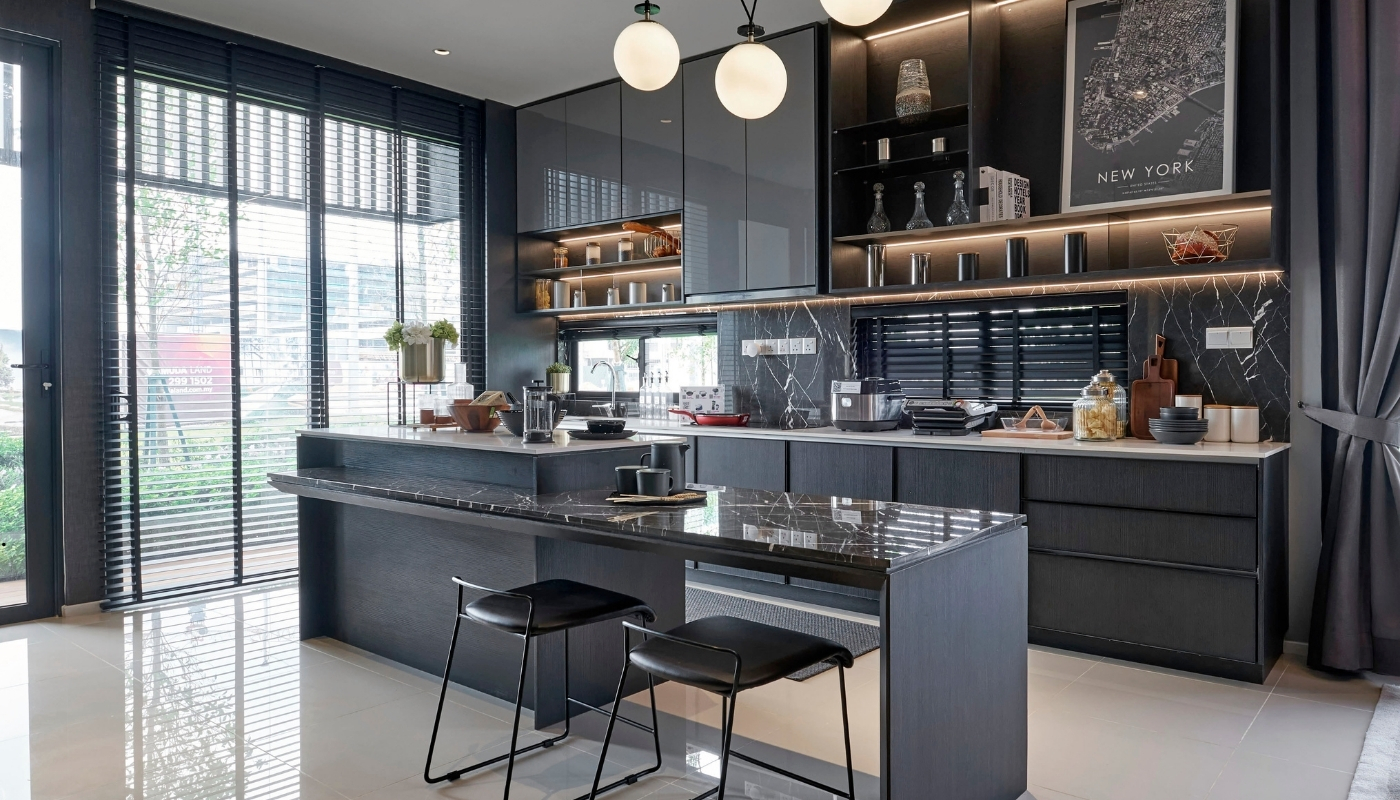
Classic kitchens often lean toward shaker-style cabinetry, inset doors, decorative corbels, panel-end details, and quality wood or painted finishes.
-
Kitchen islands remain a must — size them to balance circulation and utility.
-
Countertops: timeless materials like quartz, honed or polished stone, or natural stone (with care for zoning).
-
Backsplashes: subway tile, stacked stone, or mosaic tile accents work well.
-
Lighting: layering with recessed lights, pendant lights over the island, under-cabinet lighting, and statement fixtures over dining area.
-
Consider walk-in pantries or appliance garages behind larger doors to hide clutter.
-
Windows: large or banked windows over sinks, or direct access to patios for outdoor dining integration.
5. Primary Suite / Bedrooms / Bathrooms
-
In the primary bedroom, aim for privacy, views, and direct connection (or transition) to outdoor space.
-
Bathrooms usually benefit from dual vanities, linen closets, separate tub and shower, frameless glass, and classic tile or stone work.
-
Consider comfort-height toilets, recessed medicine cabinets, built-in niches in showers, heated floors or towel bars (especially for a higher-end finish).
-
Bedrooms: durability, comfort, closet layout, natural light, and clear circulation.
6. Utility / Service / Laundry / Mud Rooms
-
These spaces often get less attention but are crucial in a whole-home remodel. Use durable surfaces, maximize storage, integrate work flow (sink, countertop, hanging, folding, cabinetry).
-
Mudrooms at side or back entry — benches, cubbies, lockers.
-
Laundry adjacent to bedroom or hallway, with noise isolation, venting, and plumbing layout designed to minimize disruption.
7. Connectivity & Outdoor Integration
-
Sliding or folding glass doors (e.g. multi-panel sliding doors) to patios or courtyards.
-
Covered outdoor living (patio roofs, pergolas) can become “rooms” themselves.
-
Roof overhangs, trellises, or sun-shade devices help manage solar exposure.
-
Landscaping: hardscape, walkways, lighting, planting should complement house style.
-
Exterior lighting (wall sconces, path lights, soffit lights) is part of the architectural expression.
8. Timeless Color & Material Palette
-
Base neutrals: warm whites, light grays, greiges, taupes — these allow flexibility in accents.
-
Accent tones: deep greens, navy, charcoal, bronze, muted wood tones.
-
Metals: classic finishes like polished nickel, satin brass, oil-rubbed bronze, or black — chosen to harmonize with trim, lighting, hardware.
-
Wood tones: consistent or complementary across flooring, millwork, cabinetry (avoid too many conflicting stains).
-
Texture: stone, tile, plaster, linen, subtle wallpaper details — layering texture gives visual depth.
Challenges, Risks & Mitigation Strategies
A project of this scale is always subject to surprises. Here are common pitfalls and how to mitigate them:
| Risk / Challenge | Mitigation Strategy |
|---|---|
| Hidden structural issues uncovered during demolition | Reserve contingency funds (at least 10–20 %) and inspect thoroughly early |
| Code/permit delays | Submit complete, well-coordinated plans; involve experienced local designers/contractors; monitor permit office schedules |
| Scope creep & change orders | Keep scope stable; carefully vet choices before construction; manage client-directed changes and their cost/time impact |
| Subcontractor scheduling conflicts | Use a strong GC or project manager to sequence trades carefully; build buffer in schedule |
| Material delays | Order long-lead items (cabinetry, countertops, fixtures) early; use local suppliers when possible |
| Cost overruns | Monitor budget carefully, get multiple bids, hold regular budget reviews, use allowances and contingencies |
| Disruption to daily life | Phase work, use dust barriers, plan temporary utilities or relocation, protect finishes |
| Coordination failures between trades | Use weekly coordination meetings, spot-check as you go, field supervision, cross-check drawing sets |
| Final punch-list disagreements | Walk-throughs throughout project rather than waiting until end; document acceptance at each major milestone |
With disciplined project management and clarity of scope, many of these risks can be contained.
Case Study: Applying to a Hypothetical “Classic Whole House Remodel in Roseville”
To illustrate how these elements come together, here’s a narrative scenario.
Background
The homeowners purchased a 1970s-era 2,400 sq ft home in Roseville. Its layout is compartmentalized: a dark cramped kitchen, small living/dining rooms, narrow hallway, fairly small bathrooms, outdated systems (single-pane windows, inefficient HVAC, no insulation in attic, old plumbing). The style is generic mid-century.
The homeowners want to transform it into a timeless, classic home with open living, a defined master wing, improved outdoor connection, and energy upgrades — all while preserving some mature trees and site amenities.
Process Highlights
-
Assessment: Structural engineer confirms roof framing is adequate, but lateral bracing is weak; plumbing stacks need updating; HVAC ducting is inadequate. Soil report shows no major issues.
-
Programming: They decide on 3 bedrooms, 2.5 baths, a great room combining living/dining, a flex office room, laundry/mudroom transition zone, and outdoor patio/covered lanai. Natural light and flow are priorities.
-
Design: The designer works a scheme tying the front façade to a classic California colonial aesthetic — siding, balanced windows, front portico. Inside, a central hallway opens visually through to the rear yard. The great room has a detailed coffered ceiling and built-in cabinetry. The kitchen has an island, but with modest scale to preserve flow. Master suite includes dual closets, a spa-style bathroom, and direct access to a small private patio. Window layouts and roof overhangs are tuned for sun control.
-
Documentation & Permits: The design-build team submits full plans, gets approval from the Roseville Building Division, including energy compliance per Title 24. HOA design review approves façade changes.
-
Construction:
-
Demolition reveals some joist rot; the team replaces damaged substructure.
-
Framing adjustments open up a partition wall to extend the great room footprint.
-
HVAC ducts are re-routed, electrical upgrades installed, plumbing rerouted for the master bath addition, rough-in inspections passed.
-
Insulation and envelope wrap applied; new low-E windows installed.
-
Drywall, trim, flooring, finish carpentry, built-ins.
-
Cabinets and countertops installed. High-end classic fixtures are selected (porcelain undermount sinks, polished nickel faucets, marble-look quartz).
-
Painting, final trim, lighting installation, punch list.
-
-
Handover: Final inspections are passed. The homeowner moves back in. A two-month follow-up addresses any minor settlement cracks or adjustments.
Outcome & Takeaways
-
The home now feels cohesive: the same hardwood flooring flows from the foyer through the great room and into hallways.
-
The façade and outdoor transitions feel integrated with the landscape — the back covered lanai lines up with the garden and mature trees.
-
Energy performance improved: better insulation, new windows, efficient HVAC, and proper air sealing.
-
The homeowners gained a flexible design that will age well, with neutral base finishes and accent potential over time.
This scenario illustrates how design, structure, finishes, systems, and geographic context must all work together.
How Remodel California Fits & What You Can Learn
Your linked site, Remodel California, focuses on whole house remodeling services and presumably provides inspiration, documentation, and portfolio examples across California. An article on “Classic Whole House Remodel Roseville CA” is directly aligned with the kind of content that a site like Remodel California could use to market its services or inform potential clients.
Here are ways to align:
-
Showcase regional projects: Feature case studies or gallery images from Northern California remodels, especially in the Sacramento / Roseville region, to build local credibility.
-
Emphasize design philosophy: On the site, highlight your approach to “classic yet contemporary” — your choice of materials, detailing, longevity — to differentiate from trendy, fast-fashion remodeling.
-
Educational articles and guides: Use content like this article (or adapted shorter versions) to help clients understand process, costs, and pitfalls.
-
Local SEO optimization: Use keywords such as “Roseville CA whole house remodel,” “Roseville classic home renovation,” “Sacramento area full home remodel,” etc., along with photo galleries, client testimonials localized to Roseville or Placer County.
-
Process transparency: Present your process (phases, timelines, permitting) clearly, so clients know what to expect.
-
Resource links: Provide budgeting tools, financing options (home equity line, construction loans), permitting checklists, and vendor guides.
-
Case studies & before/after galleries: Let potential clients see real transformations, especially paying attention to classic detailing, system upgrades, and how you managed challenges.
-
Client testimonials & references in Roseville: Those lend the local credibility that many homeowners look for before selecting a contractor.
If you like, I can help you produce a fully finished 4,000-word article ready to publish on Remodel California about “Classic Whole House Remodel, Roseville CA,” complete with images, captions, SEO structure, etc.
Tips & Best Practices (Summary List)
Here’s a distilled list of what a homeowner in Roseville should keep in mind when planning a classic whole house remodel:
-
Start with honest assessment and realistic budget — know your existing structure and systems.
-
Define your priorities clearly — which rooms, performance upgrades, style direction matter most.
-
Engage a strong, local design-build or GC team early — knowledge of Roseville codes and practices is invaluable.
-
Vet contractors by portfolio, references, and process clarity — avoid surprises.
-
Lock in schematic design and budget before full drawings — prevent runaway changes.
-
Use high-quality, classic materials — you’ll live with finishes longer, and classic choices age better.
-
Respect circulation, proportion, lighting — quality of space is as important as beauty.
-
Order long-lead items early, and plan your schedule to buffer for contingencies.
-
Implement good dust control, communication, and site logistics — remodels are disruptive.
-
Document everything, do regular walkthroughs, manage changes carefully — clarity prevents disputes.
-
Insist on warranties, system commissioning, and quality testing at end — mechanical, plumbing, electrical must perform.
-
Accept that unforeseen issues will occur — that’s why contingency is essential.
-
Design for longevity and flexibility — future-proof wiring, mechanical capacity, neutral palettes with accent potential.
-
Pay attention to outdoor integration — a classic home remodel isn’t complete without connecting to the site and landscape.
Conclusion
A classic whole house remodel in Roseville, CA is a rewarding way to claim your home for the 21st century — merging timeless design, livability, better systems, and local relevance. But it’s not for the faint of heart. Success depends heavily on thorough upfront planning, smart design, disciplined execution, strong project leadership, and local expertise.
By focusing on classic aesthetics, strong architectural detailing, integrated systems, and high workmanship standards, your remodeled home can remain beautiful, functional, and relevant for decades.
Resources
-
Best Home Remodelers in Roseville, CA — Houzz listing houzz.com
-
Top General Contractor in Roseville, CA — Hart Builds LLC hartbuilds.com